
Inbound & Content Marketing
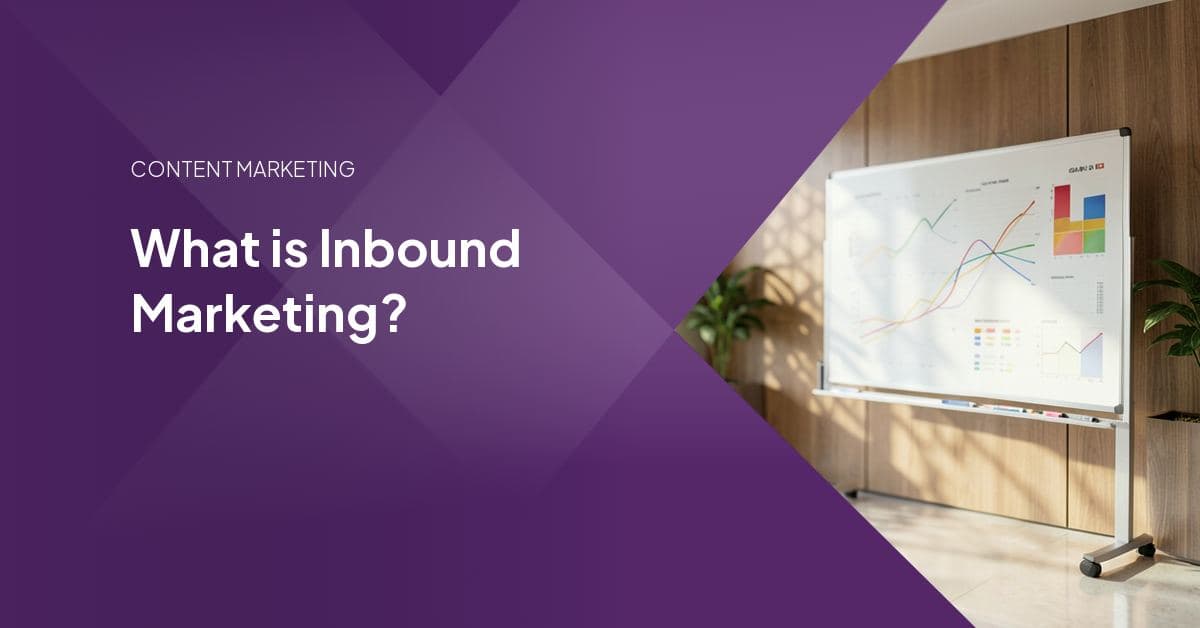
What is Inbound Marketing?
Inbound marketing earns attention with content instead of buying it. Here is what it is, and how the definition changes for a committee purchase.
Key Takeaways
- Inbound Marketing is a customer-centric methodology built on attracting, converting, closing and delighting your audience with content rather than interruptive outbound tactics.
- A B2B enterprise purchase is decided by a room of five to twelve stakeholders across six roles, so content written for one reader answers only one of the questions the purchase actually depends on.
- The path to an enterprise contract runs through five stages, and the fourth, procurement and compliance review, is a stage a vendor can be eliminated at, not merely delayed by, which changes what Inbound content has to cover.
- Programme length follows deal size: a four to six week sales cycle and a six to nine month enterprise RevOps rollout are not the same Inbound programme wearing different clothes, and treating them as one strategy under-serves both.
- Companies that publish consistently see measurably more leads than those that do not, but for a committee purchase the content has to be built for a group decision from the outset, not retrofitted once it stalls.
Inbound Marketing is a methodology that earns your audience's attention with useful content instead of buying it with ads and cold outreach. Rather than interrupting prospects, it attracts them with content that speaks to their pain points, converts them into leads, closes them into customers, and delights them into advocates.
That definition holds for any business. What changes it is who you're writing it for.
An Overview of Inbound Marketing
Inbound Marketing is founded on earning attention rather than buying it. Unlike outbound marketing, which relies on interruptive tactics like cold calling and advertising, it focuses on creating valuable, relevant content that organically attracts prospects to your brand.
That starts with top-of-funnel content addressing your prospects' challenges, then moves into middle- and bottom-of-funnel content that guides them through their buyer's journey, using channels from blog posts and social updates to webinars and interactive tools.
A few things make it stand out:
- Customer-centric. It prioritises content that attracts, educates and helps your audience, rather than interrupting them.
- Relationship-building. It earns trust by guiding prospects through their own decision process, on their own schedule.
- Built for long-term growth. It compounds. A post published this quarter keeps attracting visitors next year, which is not true of a paid campaign the day the budget stops.
Who Actually Reads It
Here is where the generic version of this answer breaks down for a committee purchase, and it's worth being specific about why.
Most Inbound content is written for a single reader: one persona, one pain point, one call to action. That model works when one person can approve the purchase. It does not work for an enterprise CRM or RevOps buy, where the room deciding is five to twelve stakeholders across six roles: an economic buyer weighing budget and ROI, a technical buyer checking architecture and integrations, a champion mobilising internal support, an influencer from IT, legal or compliance, an end-user judging usability, and a blocker raising risk objections. A single blog post cannot be all six of those readers at once, and content built as if it can leaves five of the six unanswered.
Gartner's 2025 B2B buyer survey puts committee-style technology buying groups at 5 to 16 people across as many as four functions globally, which is the same shape this market's own committee takes, just with a longer clock attached: a mid-market CRM purchase with customisation runs three to four months here, and an enterprise RevOps or Inbound programme runs six to nine.
That length is not a delay to plan around. It is the actual duration of the thing you're measuring. A programme judged against a four-week outbound campaign's results will look like it is failing in month two, when it is simply not finished.
Where Inbound Content Actually Loses the Deal
The path to a contract here runs through five stages: needs assessment, vendor shortlist and demos, business case and ROI, procurement and compliance review, then final approval. Most Inbound strategies are written as if the fourth stage does not exist, or is a formality between the demo and the signature.
It is not. Procurement and compliance review is where a shortlisted vendor gets removed, not merely delayed, and it is read by a stakeholder your Attract-stage content was never written for. A top-of-funnel blog post that answers "what is Inbound Marketing" well does nothing for the influencer reading your data handling policy in month four. Content that survives this stage has to exist before the committee reaches it, which means the content plan for an enterprise-facing programme has to include compliance-facing material from the outset, alongside the usual awareness and consideration pieces, not bolt it on once a deal stalls.
The Benefits, Once the Content Fits the Room
Done for the right audience, Inbound still delivers the outcomes it always has:
- Trust and credibility. Insightful content positions your business as a subject-matter authority, which matters more to a compliance influencer deciding whether to trust your firm than any single sales call does.
- Higher-quality leads. Content built around specific buyer personas and journey stages attracts people genuinely evaluating a purchase, rather than casting a wide net.
- Cost efficiency. Once published, content keeps working without the recurring spend a paid campaign requires, and its performance can be measured and refined over time.
- Topical authority. Consistent, persona-matched publishing is what search engines and AI answer engines learn to associate with your brand on a topic.
The Limits Worth Naming
Inbound is not free or instant. It's time-intensive to produce well, slower to show results than a paid campaign, increasingly competitive as more businesses publish, and it requires real expertise in content strategy, SEO and the platform running it. None of that changes with a regional audience; if anything, a longer committee cycle means results take longer to attribute cleanly, which is one more reason to plan the programme against the real cycle length rather than a generic one.
How to Actually Do It
Building an Inbound programme starts with buyer personas built for every seat in the room, not just the person who fills out the form, then a content plan mapped to the buyer's journey rather than a single funnel. From there it's SEO-driven content that earns organic search visibility, a website built to convert what that content attracts, and analytics that track the whole cycle rather than just the first form fill.
The tactics themselves, the specific content types, lead magnets and channels that generate leads for a committee purchase, are their own subject. Our guide to generating more Inbound leads covers those in detail.
Getting Started
You can build this in-house or bring in a partner. In-house gives you full control over voice and strategy, but it demands real time and tooling investment, and a team learning Inbound Marketing while running it usually takes longer to see results than one that has already done it. A specialist Inbound Marketing partner brings the tools, the persona and journey frameworks, and the experience of what has already worked for a committee-scale buyer here, so you are not learning the five-stage path on your own deal. If you want a second read on which of the six roles your current content is actually reaching, book a free consultation and we'll walk through it with you.
Sources
Frequently Asked Questions
Is Inbound Marketing the same thing for a small business and an enterprise buyer?
No, the mechanics are shared but the target is not. A self-serve buyer reads a comparison post and signs up. An enterprise buyer's purchase runs through a five to twelve person committee, so the same blog post has to satisfy a technical buyer's integration questions and a compliance influencer's risk questions before either signs off, not just attract one reader's click.
What are the four stages of Inbound Marketing?
Attract, convert, close and delight. Attract draws visitors with content matched to their search intent. Convert captures contact details through a form or offer. Close nurtures that contact into a customer, aligning marketing and sales. Delight keeps the relationship going after the sale so a customer becomes an advocate rather than a one-time buyer.
How long does an Inbound Marketing programme take to show results?
It depends on what is being bought. A simple CRM purchase can close in four to six weeks, mid-market CRM with customisation runs three to four months, and an enterprise RevOps or Inbound programme typically runs six to nine months. A programme timed against the wrong cycle looks like it is failing when it is simply not finished yet.
Do I need Inbound Marketing if I already do outbound sales?
Most B2B programmes run both, but for a long enterprise cycle Inbound does a job outbound cannot: it reaches the five or more people in a buying committee who never take a cold call, several of whom research the decision entirely on their own before a salesperson is ever looped in.
HubSpot and RevOps for the Region
Ready to Talk to a HubSpot Team That Knows This Region?
Diamond partner, ranked in the top 3% of HubSpot partners worldwide, with 18+ years in business and 11,800+ projects delivered across a bench spanning Cairo and Canada. Tell us where your CRM is falling short and we will map the fix.
Related Articles
Inbound Marketing Automation: Sequencing Sends Around Ramadan and Eid
Five inbound marketing automations in HubSpot, and why the account timing setup and the Islamic calendar change what actually gets sent when.